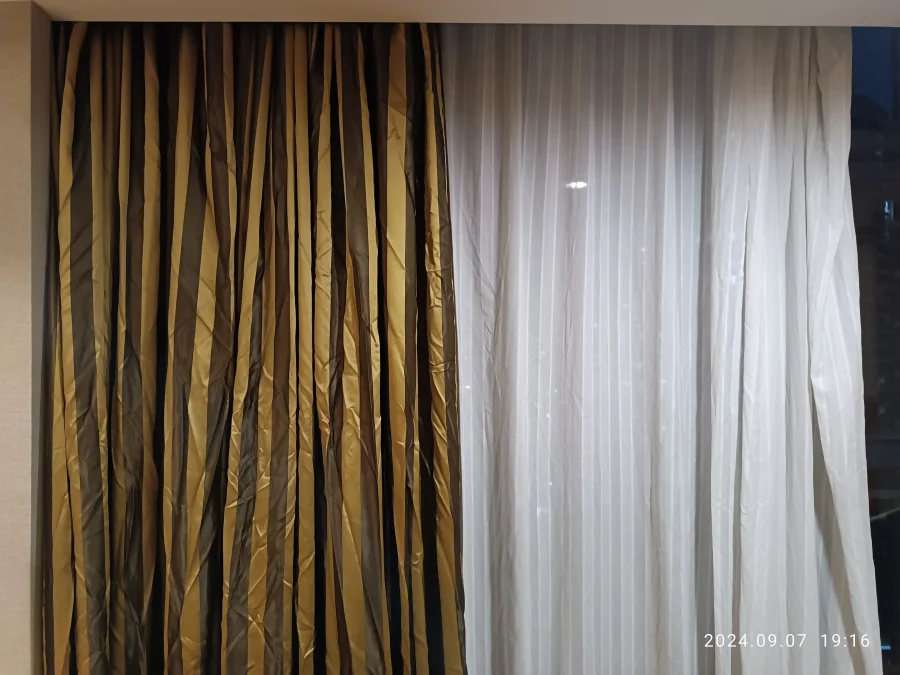
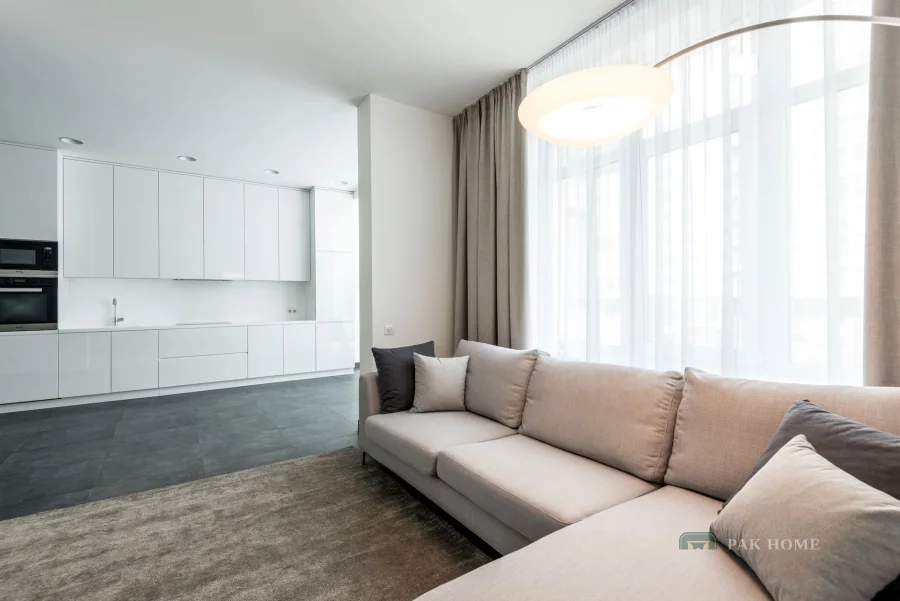
Bedroom vs Living Room: Different Curtains
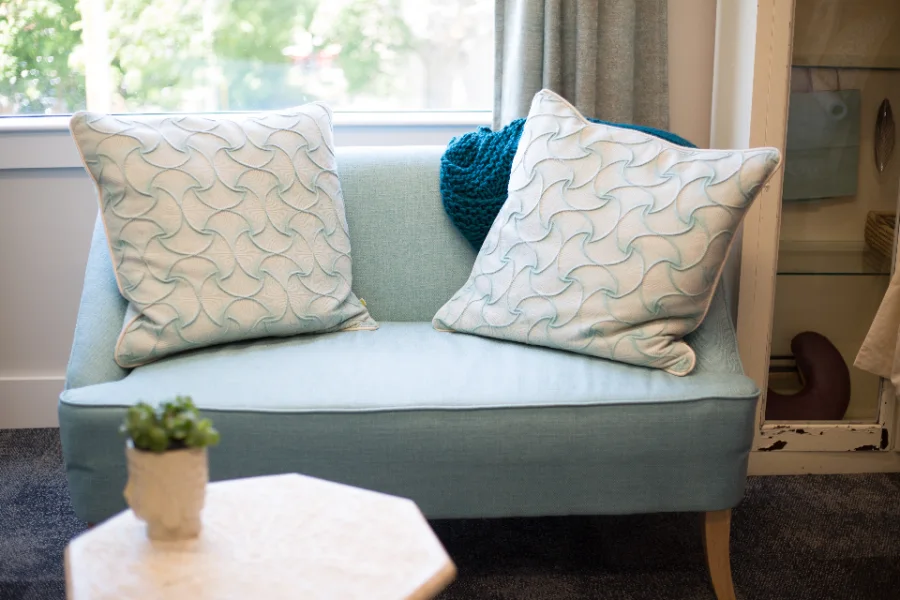
The most common regret we hear is not about colour. It is that someone chose one curtain for the whole apartment, and it is right in one room and wrong in the other. The two rooms are asking for opposite things.
The bedroom is a control problem
A bedroom curtain has one hard job: darkness when you want it, on demand, including at nine in the morning. Everything follows from that.
- Blackout fabric, and fitting that supports it. Ceiling-fixed track, carried past the reveal on both sides, hem to the floor. The fabric alone will not do it — the light comes around the edges, which is the whole argument in lining, dimout and blackout.
- Think about the heat as well as the light. A bedroom on a west wall is still giving back the afternoon at midnight. A lined curtain across that glass measurably takes the edge off what the air conditioning has to fight.
- Quiet operation matters more than you expect. The curtain gets drawn when someone else is asleep. Smooth track and a heading that runs cleanly is not a luxury here.
If sleep is the actual reason you are shopping, blackout curtains and sleep is the more specific read.
The living room is a glare problem
Here you almost never want darkness. You want the room bright, the view kept, the television watchable, and no one on the balcony opposite looking straight in. That is a different fabric.
- A sheer does most of the work. It cuts glare, softens the light, and gives daytime privacy while you can still see out — chiffon sheers are the workhorse of living rooms in this market.
- Add a heavier layer for the two hours that need it. The evening sun straight into a screen, or the night. A double track carrying a sheer in front and a blackout behind covers both states from one window.
- Stack-back matters more here, because you look at this window open all day. The track should carry past the glass so the open curtain sits on wall.
Where the two rooms meet: making it look deliberate
Different function does not have to mean visual mismatch, and this is where most people either over-match or give up.
- Hold the heading constant. The same heading across the home — all wave, or all pinch pleat — reads as one decision even when the fabrics differ. Heading types explains the look of each.
- Hold the height constant. Track at the same level, hems to the floor, everywhere. Inconsistent height is what actually makes a home look uncoordinated; people blame the colour.
- Let the colour shift within one family. A darker tone of the same neutral in the bedroom and a lighter one in the living room looks intentional and does the two jobs properly.
The rooms nobody plans for
A child's room usually wants dimout rather than full blackout, and a cord-free or motorised option is a safety decision as much as a convenience one. A majlis is a living room with formality and usually much more width — that has its own rules, in majlis and wide window curtains. A study or home office is a glare problem like a living room, with the screen position deciding everything.
Doing it in one visit
This is the argument for measuring the whole home at once rather than window by window. We come with the four books, walk the rooms, and you see the bedroom fabric and the living room fabric side by side in your own light before either is cut — book a free home visit. If you want the size of the job first, the price estimator takes every window at once.