Do Blackout Curtains Actually Help You Sleep?

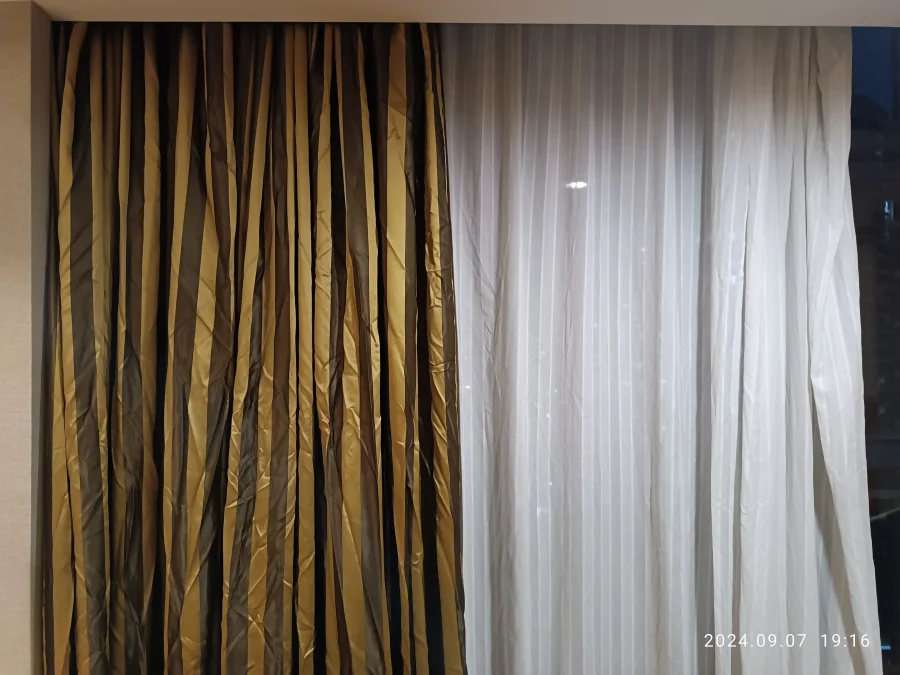
Blackout curtains get marketed as a sleep product, which sets up a slightly unfair expectation. Here is the useful version of the answer: darkness genuinely matters for sleep, blackout fabric genuinely blocks light, and yet a large share of bedrooms fitted with blackout curtains are still not dark. The gap between those three facts is almost always the fitting, not the fabric.
Why darkness matters at all
The body's sleep–wake cycle takes its strongest cue from light. Light in the evening delays the signal to wind down; light early in the morning ends sleep whether or not you have had enough of it. That is the general, well-established mechanism, and it is the reason a dark room is easier to sleep in than a bright one. It is not a medical claim about any particular person — if your sleep problems are persistent, that is a conversation for a doctor rather than a curtain company.
What is specific to the Gulf is the timing. Sunrise here is early in summer, and it arrives with real intensity rather than gradually. A bedroom that is perfectly comfortable at 11pm can be fully lit before 5:30am.
Where the light actually gets in
This is the part worth reading twice: light comes around a curtain, not through good blackout fabric. If your room is not dark, check these before you blame the cloth.
- The sides. A track that stops at the edge of the glass leaves two vertical strips of light down the wall. Running the track 15–20 cm past the window on each side is the single biggest improvement most bedrooms can make.
- The centre. Two panels that merely meet will glow down the join. They need to overlap, which means a track that allows one panel to pass the other.
- The top. Light coming over the heading, which is what happens when a curtain hangs from a pole set well below the ceiling with an open gap above it.
- The floor. A curtain finishing above the sill leaves the whole lower wall lit. Floor length is a light decision as much as a style one.
Fix those four and an ordinary blackout gives you a genuinely dark room. Skip them and the most expensive fabric available will not.
"100% blackout" — what it does and does not mean
A blackout claim describes the cloth: the fabric itself is opaque and does not transmit light. It is not a claim about your room, because the fabric has no control over the four gaps above. When someone tells you their curtains are 100% blackout and their bedroom still is not dark, both statements are usually true at once.
Does that mean a sheer is pointless in a bedroom?
The opposite, in practice. A blackout on its own gives you two states — full sun or full dark — so people leave it shut and put the lights on. A chiffon sheer in front of it on a second track gives you the setting you actually use during the day: light in, glare out, privacy from the street. The blackout then does its job at night. That double-layer arrangement is the most common thing we fit in UAE bedrooms, and it is a comfort decision more than a cost one.
The heat question
A closed blackout on a sun-facing window also keeps heat out, and the timing matters: closing it at four in the afternoon, when the room is already warm, is holding a line that has been crossed. The same curtain closed at noon means the heat never arrives. On a west-facing bedroom that is a noticeable difference to how hard the AC works.
So — do they help?
Fitted properly, yes, and the effect is obvious the first morning. Fitted to the width of the glass, they mostly just make the room look furnished. If you want to know which of the four gaps is the problem in your room, that is the sort of thing we check on a free measuring visit — and it is also why we measure the way we do. You can see the blackout range in blackout curtains, or browse the three blackout books in the fabrics catalogues.