Standard Sizes vs Made to Measure Curtains
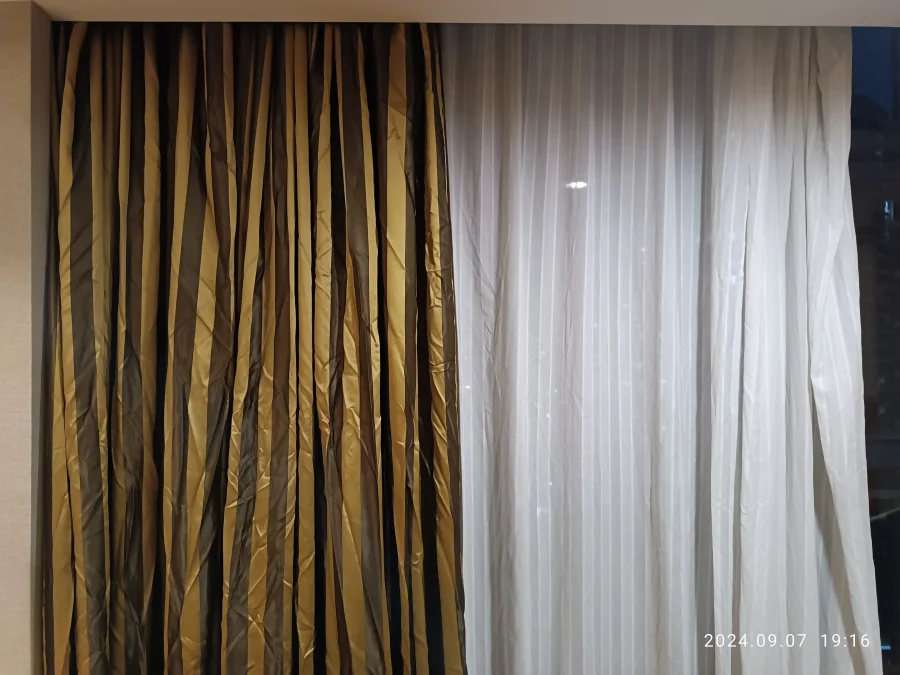
There is nothing wrong with a ready-made curtain in the right place. The problem is that the sizes they come in were decided by the housing stock of somewhere else, and UAE apartments and villas do not follow it.
What "standard" is actually standard to
Off-the-shelf drops are built around ceiling heights common in European and North American housing. Towers here are frequently taller floor to ceiling, and villa reception rooms taller again. Openings are often wider — full-width glazing onto a balcony is normal rather than exceptional. So the common outcome is not a curtain that fits badly; it is a curtain that fits almost.
Almost is the expensive kind of wrong
A short drop is the one people notice, because it looks unfinished. The failures that cost you more are the ones that look acceptable:
- A hem that stops above the floor leaves a gap that light comes through all afternoon and that hot air convects through all evening. In a bedroom this is the difference between blackout and nearly blackout, and nearly blackout is not a thing you can sleep in.
- Panels that only just meet the edge of the reveal leak a bright line down each side. On a west-facing window that line lands on a wall or a screen at exactly the wrong hour.
- Not enough width for fullness. This is the quiet one. A curtain needs substantially more fabric than the window is wide or it hangs flat and reads cheap, and it does not close into proper folds — how much fabric you need has the arithmetic.
Each of those defeats the reason you bought curtains, which makes a cheap curtain that does not do its job the most expensive option on the table.
What made to measure actually changes
Four things, and none of them is the fabric:
- The drop is cut to your floor, measured from the track position you are actually going to use — not from the top of the window.
- The width is cut to the track, including the overlap past the reveal on each side and the fullness across the run.
- The heading is built for that width, so the folds land evenly instead of bunching where the panel ran out.
- The track is chosen for the wall and ceiling you have, which on a false ceiling is a real question. See how we measure.
None of this is exotic tailoring. It is the difference between a window covering and a curtain.
When ready-made is genuinely the right call
Be fair about this. Ready-made makes sense for a short lease where you will not take them with you, for a spare room nobody sleeps in, for a temporary fix while you decide, and for a small standard window that happens to match a stock size. If you are renting and thinking about portability, that is its own question — curtains in rented apartments covers what moves with you and what does not.
Where it stops making sense is any room where the curtain has a job: darkness for sleep, heat off a glazed wall, privacy from the tower opposite.
Measure your own windows before you decide
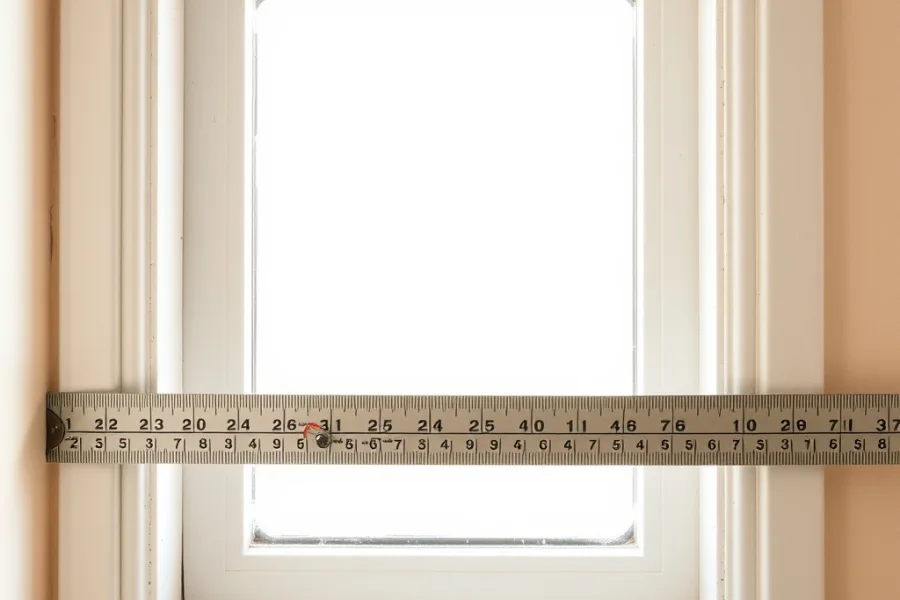
You can settle this in ten minutes with a steel tape. Measure the width of the intended track run, not the glass, and the drop from track height to floor. Then compare it against whatever stock sizes you were considering, and be honest about the gap rather than assuming the curtain will stretch. The measurement guide walks through it, and the price estimator turns your numbers into a figure. If you would rather not climb anything, book a free home visit — the measuring is ours to do and it costs nothing.