How Much Fabric Do Curtains Actually Need?

Here is the thing nobody tells you when comparing curtain quotations: two quotes for the same fabric, the same window and the same heading can differ by a third, and the difference is not the supplier's margin. It is how much cloth they are putting in the curtain.
Fullness, in one paragraph
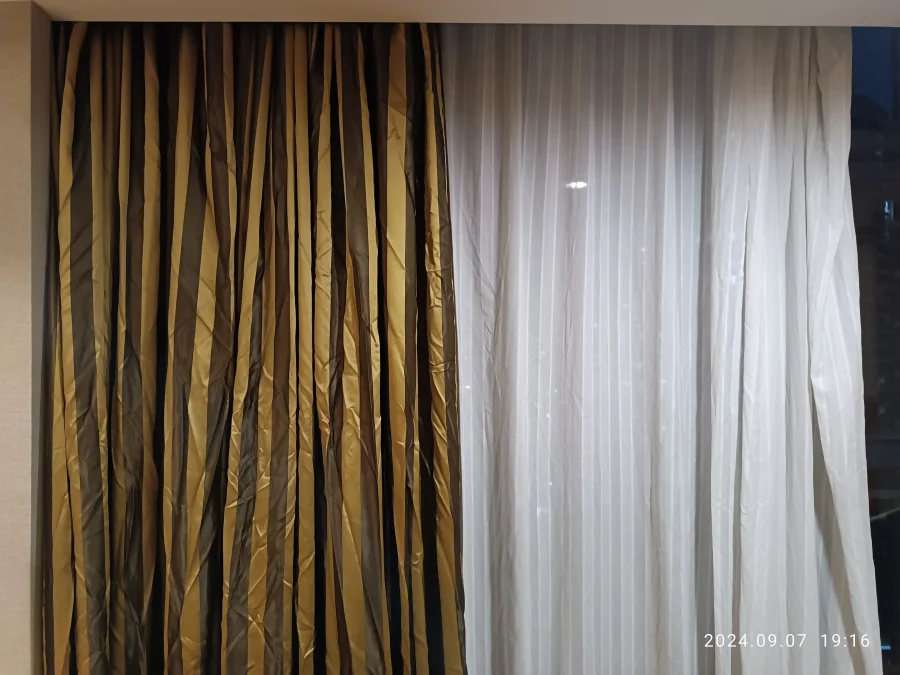
A curtain is not the width of the window. It is a multiple of it. That multiple is called fullness, and it is what creates the folds. At 1.5× the track width the fabric hangs nearly flat with shallow ripples. At 2.0× it gathers into recognisable folds. At 2.5× it looks deep and soft and, frankly, expensive. Same fabric, same colour, same window — completely different curtain.
The numbers we work to
- 2.0× for a classic pinch pleat — the tailored look, folds formed and stitched.
- 2.2× for a chiffon sheer, because sheer fabric needs more gathering to read as cloth rather than as a flat panel of gauze.
- 2.5× for a wave heading, where the continuous S-curve is quite literally made of surplus fabric.
So for a 3-metre track with a wave heading you are buying roughly 7.5 metres of fabric width, not 3. That is the single biggest line in the cost of a curtain, and it is why the heading you choose changes the price — see curtain headings explained.
Doing the sum yourself
Roughly: track width × fullness = fabric width needed, then add for side hems and for the returns where the curtain wraps back to the wall. Then the drop: measure from the track to where you want the hem, and add for the heading allowance at the top and the hem at the bottom.
One detail that catches people out. Our fabric comes on a 320 cm roll, which is wide enough that most curtains are cut with the fabric running sideways — the roll width becomes the curtain's drop. That avoids joining seams down the face of the curtain, and it is why a very tall window can sometimes cost less than you expect and a very wide one more.
How to spot a lean quotation
Fullness is invisible on a quotation unless it is written down. If one quote is noticeably cheaper than another for the same fabric, ask both suppliers a single question: what fullness is that priced at? A curtain cut at 1.5× when you were imagining 2.5× will be cheaper, and it will hang flat against the wall in a way you will notice every day and not be able to fix afterwards.
It is the one specification we would encourage you to ask every supplier for, including us. It is also why our price estimator quotes on the real multiplier rather than on the bare window size, and why the figure from a measured visit is the one that actually holds.
Do not forget the return and the overlap
Two small allowances that matter more than their size suggests. The return is the bit of curtain that wraps from the front of the track back to the wall, closing the gap at the side. The overlap is where the two panels cross in the middle. Both cost a little extra fabric and both are the difference between a room that goes dark and one that glows at the edges — which is the same point made from the other direction in do blackout curtains actually help you sleep.